2. NEWTON’S LAWS AND PHYSICS
Newton’s laws in 1687, first law or Law of Inertia, second law or Law of Force and Newton’s third law or Law of Action and Reaction, are the laws upon which classical dynamics or study of movement base in relation to their causes.
Newton’s Physics provided causes for being at rest. We do not know if Newton liked to ski and to reduce friction as much as possible, but what he needed were forces that counteract omnipresent forces of gravity to explain why an object remained at rest.
Wikipedia points out that while, according to ancient Physics of the Greeks, natural state of bodies was to be at rest; for Modern Physics, it is conserving state of movement if there are not causes for being at rest, such as friction.
If Newton’s Laws developed dynamics of being at rest, Theory of Relativity and Quantum Mechanics, both of which were around the beginning of the last century, have developed kinematics of movement. That is, they are scientific theories that describe movement but not its causes, just its mathematical representation.
Einstein’s General Relativity tries to add some causes, such as geometric effect of the space-time continuum, but it is still a mathematical explanation, always partial and with many odd singularities.
As far as Quantum Mechanics, which is incompatible with the theory above, it does not even attempt to explain causes for motion. Quantum Mechanics is so abstract that some of its lines of argument end up stating that reality does not exist, and that mass or matter are emerging waves, or something of the sort. So much kinematics, or science without support of physical causes, is closer to mathematical philosophy than mechanistic physical laws.
Nor has Modern Physics managed to explain causes of fictitious forces of gravity, in spite of Newton’s express wishes; but it has allowed reaching a vibrating Physics by determining that natural state of things is to be vibrating.
String Theory attempts to explain this state of vibration from an entirely mathematical, relativistic, and quantum perspective, and with physical dimensions having magical powers.
Development of Global Mechanics provides us with the reticular structure of matter –gravitational, kinetic, or Global Aether– and the composition of elementary particles, mass, and normal matter. The Global Aether and LUM Aether (Luminiferous, universal, and mobile) have given way not only establishing the atractis causa for gravitational force and electromagnetism, as well as unification of both forces, but also distinction between movement due to real forces of the correspondent fields as properties of the Global Aether, and to displacement of both the Global Aether or LUM Aether (Luminiferous, universal, and mobile) themselves.
In short, Global Physics tries to explain not only causes for being at rest but also causes of movement and the tendency to maintain that state. Mach's principle of 1893 would be a philosophical antecedent by stating, "The inertia of any system is the result of its interaction with the rest of the Universe."
From the abovementioned, we can gather that, to understand thoroughly changes to Newton’s laws proposed by Global Physics, it is convenient to read the book Global Mechanics. In other words, the goal is to understand physics principles, and the properties Global Aether has regarding motion and acceleration, which support Global Equivalence Principle, or the gravity-energy-mass equivalence.
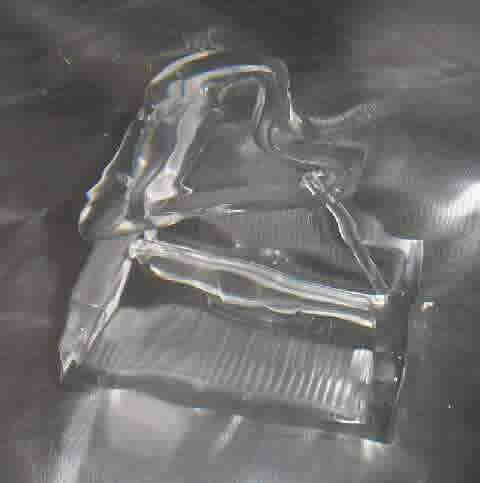
Perhaps the example of the piano of my friend Gema can help explaining, in broad strokes, relationship of new theory with Classical Physics of Newton's Laws and Modern Physics:
Intuitive example of Gema piano
First, we would have Newton’s Laws describing movement on the flat part of the surface of the piano. The big advance in Classical Physics in relation to the Greeks is proposing that a piano on an icy surface will make it so that the bodies remain in their state of rest or motion due to lack of friction.
Later, we would have Relativistic Mechanics, which denies the existence of the poor frozen piano, and where differences between Newtonian anticipated movement, and observed movement adjust in making abstract piano surface stretch or shrink in another dimension; which, by the way, it would be quite weird. Time, besides being the additional dimension mentioned, also does something similar but in this case, with itself.
Quantum Mechanics offers a rather different perspective that analyzes motion of an atom of an abstract piano by imposing a limit of knowledge, given that there is uncertainty regarding what is a piano, and why it moves.
A modern unifying focus would be that of String Theory, which would add music to the scene by allowing the small strings of the piano to vibrate in nine or more dimensions with their corresponding stretching, dances, or magical powers.
Other quantum theories suggest there are many parallel worlds, or trips back in time, in their eagerness to unify physics forces. It is a strange way to unify them by creating additional worlds.
Global Physics tries to understand motion on top of a piano of ice in a pool of water. It involves the ripples in the trajectory of the objects, due to the vibration of the piano by the pool being on the rooftop of a very tall metallic building, and full dynamics of the floating piano and the objects on top of it.
Lastly, it aspires to understand the variations in all previous movements caused by changes in temperature and saline concentration, including changes in the physical state of normal matter.
New physics paradigm includes, on one hand, returning to Euclidean space and to absolute time. On the other hand, it defines types of movement according to whether they refer to dynamics of the reticular structure of matter itself, or motion upon this structure; due to Global Aether being the material support for kinetic energy and mass, with their respective peculiarities.
Likewise, Global Mechanics provides us with clues for new types of energy regarding their material support, or rather, reticular support.
Relationship of new theory with Classical Physics of Newton's Laws and Modern Physics could condense into the following points:
New global model is an in-depth model of Newton's Laws in terms of greater scope of application and its elucidations, corrections, or developments of corresponding laws and physics principles.
As regards Einstein's Theory of Relativity, it only supports concept of relativistic mass or mass-energy equivalence, yet with necessary conceptual precisions. In particular, it considers relativity of time and space wrong. Necessary adjustments center on energy and speed.
-
Global Physics agrees with Quantum Mechanics in a large part of the description of physics reality, but not with some concepts related to it. Nonetheless, it is worth pointing out that this discipline is mostly descriptive and with functional or mathematical principles, which are no longer necessary once the new model replaces them with characteristics or properties of the Global Aether; therefore, some of them becoming laws.
Given the significance of the historical evolution of this topic, we are going to present each one of Newton's three Laws of Dynamics in following sections. It will allow us to express how convenient is to update Laws of Dynamics to the current development of Physics, especially new paradigm that Global Physics proposes.