
4. Genetics and intelligence
Until today, there are numerous statistical studies on IQ heritability. The observed correlation is low, except in identical twins, which is 80-85% among them; nevertheless, if they had considered the relationship with their parents, they would also have obtained a low correlation.
The problem is the lack of a correct definition of the variable to analyze. If the studies were about the color of the sisters' flowers or rats, as in the typical examples of Mendel's laws, again the results would be low correlations!
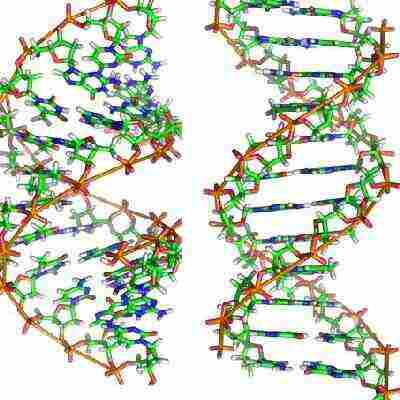
There is not a simple linear relation; there are jumps in continuous variables with random processes governed by evolutionary genetics laws. Establishing the relationships implied by the Conditional Evolution of Life, it is possible to obtain a high IQ correlation between the parents and their children. Therefore, it indirectly verifies the coherence of the theory.
The genetic influence on cognitive abilities has been and continues to be a great topic of debate because of its possible social consequences.
The EDI Study shows both the hereditary nature of relational intelligence in general and in the strict sense –with high reliability; in other words, it validates a large part of the Conditional Evolution of Life.
Although Statistics is famous for its vulnerability to manipulation, it is also true that some people do not want to recognize reality as evident as it may be. They are happier living in their imaginary world!
This chapter looks at a few points in favor and against a high correlation in evolutionary genetics of intelligence, and at the difficulties or elements allowing for the coexistence of such different positions.
.
4.a) Genetic predisposition
4.a.1 Highly gifted children
Their existence indicates the genetic inheritance of intelligence beyond a reasonable doubt.
Another significant argument supporting the heritability of human intelligence is the impossibility to isolate any specific environmental cause for the observed correlations. Also, brothers and sisters with similar environments have different levels of reasoning.
Furthermore, the fact that children intellectually, physically, or artistically gifted exist supports the hereditary character of these abilities.
4.a.2 Cognitive processes and genetics
Accepting formal logic, intelligence, and intuition as variations of the cognitive processes due to the method LoVeInf would mean admitting the genetic origin of reasoning capacities.
The method of Logical Verification of Information occurs, in this case, just after the genetic transmission and even after the initial development of a new being. However, keeping the adjective related to genetics in the name of the method indicates its design is innate.
The book Conditional Evolution of Life includes a section on the theoretical framework of The EDI Study about the nature of intelligence and genetics with or without the application of the method Logical Verification of Information.
GENETIC ENGINEERING APPLIED TO INTELLIGENCE - I
An ever-present issue when studying the genetic inheritance of intelligence is the possibility of its improvement along with life.
If intelligence is a genetic characteristic, then it seems there is no chance of enhancement. In this case, it would represent an inequality among human beings from the very beginning, which is not very pleasant for most people; this leads to denying the genetic inheritance of intelligence unless it is confirmed absolutely, an impossible goal when is already established beyond the evidence.
However, in the future, it may be conceivable the possibility of refining intellectual capacity, despite its genetic character, if the technology of genetic engineering advances adequately. This prospect is still a long way off but maybe not as far as we might think.
The EDI Study –Evolution and Design of Intelligence– demonstrates not only the heritability of relational functions making up intelligence but also that they are mainly in a single chromosome.
If the study is correct; the problem of increasing inherited intelligence reduces to the upgrading of the chromosome involved. Nowadays, it would be easy to identify the responsible chromosome; nevertheless, it looks is the sex chromosome, as much Y as X.
The film Gattaca discusses the option of selecting descendant’s qualities with great tenderness and respect for the individual’s freedom regarding whether to use genetic engineering or not. Moreover, it focuses about intelligence, but at no point goes into technical detail.
The problematic of altering hereditary qualities is the loss of identity or the evolutionary line from the parents to the child. Consequently, it seems weird to consider specific changes due to their moral implications. However, as in Gattaca, if the parents’ freedom of choice exists and, on the other hand, the rest of the characteristics will continue to evolve, there would be no moral objection to applying the technique of genetic engineering as is currently being done to avoid congenital diseases.
As stated previously, the intelligence concentrates in one chromosome, which represents an independent unit of the genetic code; that is to say, a new being can form from genetic code from different people’s chromosomes. It should work because functional incompatibility should not exist between genetic development involving different chromosomes.
Consequently, if genetic engineering were to allow a change to the whole chromosome in the first moments after fertilization, we could find ourselves with a new being with all the characteristics of the progenitors except those derived from intelligence together with all the other contained in the same chromosome.
It is not about forcing or inventing something odd regarding genetic inheritance; it is about the possibility of applying genetic engineering in the future (50 years). It could be acceptable as long as the conclusions in The EDI Study were correct, there were not collateral problems, other personal characteristics evolve naturally, and, of course, that people could freely choose with the necessary guarantees.
GENETIC ENGINEERING APPLIED TO INTELLIGENCE - II
There is no necessity to wait for 50 years to achieve improvements with genetic engineering methods if the EDI Study is correct about the update of the X chromosome and if the sex chromosome is the carrier of the genetic information linked to reasoning.
The Darwinout and Menssalina experiments of quantitative genetics could confirm the mentioned conclusions beyond any reasonable doubt.
Also, both experiments could help to establish the real chromosome responsible for the evolution of intelligence if the X and Y sex chromosomes were not.
The preimplantation genetic diagnosis is successful in the elimination of the genetic inheritance in certain diseases. Another matter is, of course, the cost of this procedure and the collateral effects that currently exist, such as multiple births.
There are some severe intelligence disorders related to the genetic inheritance of certain sicknesses and, at the same time, sometimes it is hard to distinguish between diseases and people’s characteristics.
Therefore, it is crucial that any action on this field respect people’s freedom to choose with the necessary guarantees and with adequate information within the social freedom expressed through the political decision of allowing or not its practical implementation.
The ethical perspective should not interfere with the scientific analysis since there are enough historical examples of denying scientific evidence and achieving an unnecessary delay in the technical development of our current civilization.
The closest case would be Mendel’s Laws!