
2.b) Inductive and deductive reasoning
The three primary methods (inductive, deductive and hypothetical-deductive or hypothesis testing) are to the natural sciences (physics, chemistry, biology) as opposed to the so-called human sciences (economics, politics)
The main characteristic of the scientific method is its conventionalism, which serves as a framework of the generation of objective knowledge. That is why multiple characteristics exist according to the perspective of the typology or even the names.
The first thing which caught attention was the fact that the first two scientific methods have a problem as the name is difficult to distinguish, given that in a language context they can represent just one concept with two statements: reasoning in one direction or the other, from general to specific, or vice versa.
Logically, the problem derives from the conceptual difficulty of clearly separating the elements of scientific reasoning from the other; the chosen terms do not help retain these two concepts in the memory. The first name of the third scientific method does not help much either.
Both deductive and inductive reasoning can go from general to specific and vice versa, in one direction or the other. Both use logic and conclude, have philosophic substratum elements, and tend to be susceptible to empirical testing.
Although deductive reasoning or logic is more appropriate for the formal sciences and the inductive reasoning of the empirical sciences, nothing prevents the indiscriminate application of a scientific method, or any other method, to a theory.
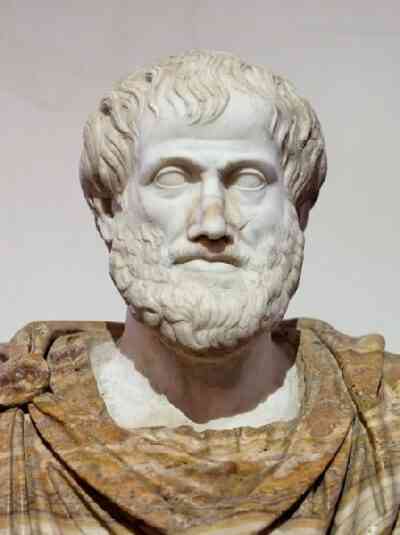
Without trying to create a controversy on this subject, the fundamental difference of deductive and inductive methods is that the first aims to indicate, through pure logic, the entire conclusion based on a few premises. Therefore, it guarantees the veracity of the conclusions; that is, if the applied logic is not invalidated. It is the axiomatic model proposed by Aristotle as the ideal scientific method.
On the contrary, the inductive method creates laws based on the observation of facts, by generalizing the observed behavior; actually, what achieves is a type of generalization without obtaining a demonstration of the laws mentioned above or set of conclusions through logic.
Such conclusions could be false and, at the same time, the partial application of logic carried out could maintain its validity. For that reason, the inductive method needs an additional condition; its application would be valid unless a case does not fulfill the proposed model.
The hypothetical-deductive method, or the hypothesis testing, does not raise any problems in principle, given that its validity depends on the results of the appropriate empirical testing.
The hypothetical-deductive method tends to improve or clarify previous theories according to new knowledge, where the model’s complexity does not allow logical formulations. Therefore, it has a predominantly intuitive character and needs, not only to reject a theory but also to impose its validity, the contrasting of its conclusions.
One could suggest the deductive reasoning, intuitive reasoning, and hypothesis testing as denominations for the three primary variants of the scientific method, or for that matter, any set of words that refer to their fundamental differences or elements and do not raise any problems for the semantic memory.
The Conditional Evolution of Life fits in perfectly with a theory based on the hypothetical-deductive, or hypothesis testing method.
Darwin’s theory of evolution, on the other hand, would fit in the inductive reasoning; but despite finding opposing examples, the scientific community does not invalidate it but adapted to square off any triangle. Why would it be?
As was previously mentioned, every theory should be able to withstand refutation; however, a theory that does not allow refutation by any conceivable fact is not scientific. The impossibility of disproving a scientific theory is not a virtue but a defect.