3.a.1. Properties of fundamental particles with mass
In the previous section, we saw the basic characteristics of the interaction of physical mass or the creation process of fundamental particles with mass. Spatial contraction of the reticular structure of matter, or Global Aether, increases its density and accumulation of elastic energy in the curls due to electromagnetic energy.
Calling “particles” elementary particles without mass is confusing for the brain when the topics are already rather complex. The common element is internal elastic energy,but if there are entities that do not have mass they should be waves. Nonetheless, on a smaller scale, even physical waves have a material base, but it changes much faster than physical mass. In any case, when one does not know if something has mass or not, “particle” is a good name.
The new physical model of the theory of mass provides and explains additional characteristics of the nature of fundamental particles with mass and their internal energy.
Spatial nature of fundamental particles
There are only two possibilities for creating a spiral in the Global Aether in a Euclidean space, or three-dimensional space: either by the left or the right; in other words, either with clockwise or counter-clockwise torsion or electromagnetic elastic energy.
It somewhat reminds us of the negative and positive charges of mass. However, it is not precisely the same, since one should not confuse the quantitative difference in the torque stress (or transversal torsion) between two points or areas of space and the qualitative difference of being elastic energy or clockwise or counter-clockwise torque stress.
Clockwise
and counter-clockwise
fundamental particle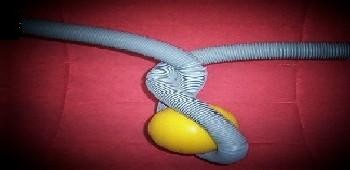
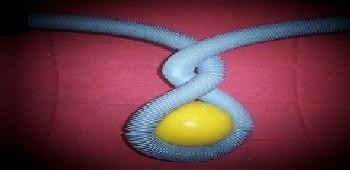
It is worth clarifying this concept, as it will have severe repercussions in the theory of the atom. The qualitative difference in fundamental particles with mass relates to matter and antimatter, while the quantitative difference in electrical charge of mass concerns the internal compensation of the charge and its environment. One could think of the atom's charge with more or fewer electrons.
On the other hand, there are fundamental particles with very different mass but with the same electrical charge and opposite signs, such as protons and electrons.
We must remember that there are also two types of photons, with elastic energy or with torque stress – with clockwise or counter-clockwise transversal torsion.
Resonance in the fundamental particles with physical mass
We are all familiar with how balls such as soccer balls move, but the torque stress of an elastic band is less intuitive. Therefore, it is worth having a torsion bar or elastic polyurethane beam or bar, like the one used in the heyelogic microscope, on hand while reading the book Global Mechanics, to feel how it acts as a torsion spring.
Global Aether Mass resonance 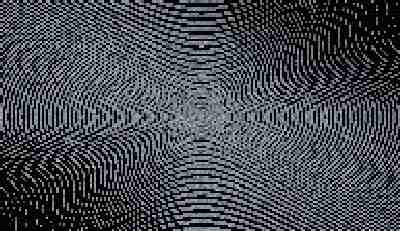
To understand the resonance of fundamental particles with mass is necessary to think of elasticity as a type of internal dynamic energy. If one bends an elastic bar, there will be a tendency to return to its straightened state; furthermore, this tendency will disappear if the bent bar were to behave as if one had taken its photo. If the Global Aether were entirely still, it could not have the property of elasticity or internal elastic energy.
The discussion regarding whether a structure with elastic energy needs to have internal elements with the property of elasticity is an interesting one because if we apply a recursive argument, we will get the infinity towards the little.
Another curious argument regarding the internal energy of matter would be whether a flexible or elastic structure could emerge from rigid elements or vice versa.
If we imagine the formation of a loop, we will think of a dynamic and elastic process that increases the tension of the longitudinal curvature of the filaments of Global Aether. This tension will balance the tendency that deformation energy has of reverting to its initial state. In short, the elastic energy of the fundamental particles of mass will be in the form of internal vibration.
Because Global Aether is compressed or compacted in fundamental particles of mass, the internal energy of their vibration will imply their stare of resonance.
The frequency of resonance of fundamental particles will synchronize the vibration of the longitudinal tension of the Global Aether since they continue to make up part of it. Nonetheless, one has to keep in mind the speed since once the fundamental particles with mass are moving, they will have to increase their vibration or resonance to synchronize themselves with the Global Aether in classical relative movement, which is somewhat similar to the Doppler Effect in mechanical waves.
Discrete nature of mass and dual property of matter which makes up mass
The properties of the elementary particles with mass in Global Mechanics allow us to assign to it a discrete nature. Besides being the result of quantified elastic electromagnetic energy, they form by loops, of which the smallest size is the electron and is just a half-fold or bend, and they reach their largest size if they are stable, protons and neutrons –in normal conditions–. Nevertheless, in black holes, there are most surely other processes of squeezing Global Aether.
Besides, the matter is continuous as pointed out at the beginning by a principle of Global Mechanics, in which the existence of Global Aether aims to support the global conservation of energy with great simplicity.
From another point of view, as Global Aether is in constant vibration, it also has a wave nature. The dual nature of mass –the common expression is dual nature of matter – derives from the elastic energy due to the resonance of fundamental particles and its relation to the tension of longitudinal curvature produced in the Global Aether.
As we shall see in the following section regarding unstable subatomic particles, some types of mass have a mixed nature, independently from the abovementioned dual nature of matter; that is, they change sequentially between the nature of an electromagnetic wave and that of a fundamental particle with mass.
Finally, we would like to point out that we should clarify expressions like discrete nature, the dual property of matter, wave-like behavior for each specific case, and use their technical meaning with caution since it will inevitably refer to the paradigm of Modern Physics and not to Global Physics.